


Condensation vs E-Liquid Leakage: How to Tell the Difference in Vape Pods

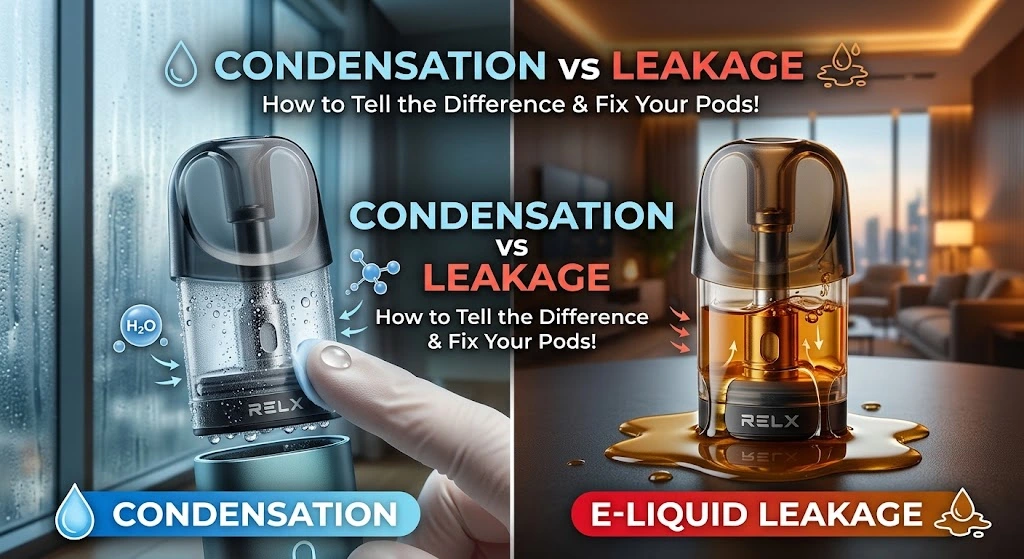
So you crack open your vape pod after a nice afternoon out in Dubai – sun beating down and all that – and you notice something odd. Got some moisture hanging around the mouthpiece, a bit of wetness by the airflow holes, or maybe some liquid pooling at the very bottom of the pod. Naturally, the first thing that pops into your head is that maybe something’s gone wrong.
You start to wonder – is the thing actually leaking e-liquid, or is all that wetness just plain old condensation?
Well the difference is a big one. Most of the time, condensation just comes with the territory when you’re using your device in the usual way, especially considering UAE’s hot weather. But genuine e-liquid leaks on the other hand could point to a dodgy pod, seals that are on their last legs, or a problem with your airflow system. If you get it wrong and confuse the two, you might end up chucking out perfectly good pods or – worse still – miss a problem that could actually do some damage to your device.
This guide’s here to help you work out what’s what and deal with that moisture in a safe way. Plus, understanding how really hot temperatures in places like Dubai, Abu Dhabi, even Ajman can mess with your device might just stop you from throwing away bits of kit that are still more than good enough for another day – and protect that delicate electric innards of your vape at the same time.
Quick Diagnostic Table: Condensation vs E-Liquid Leakage
The easiest way to begin troubleshooting is to compare the moisture’s appearance, location, and behaviour. Although these signs are useful, no single visual test can confirm the cause in every situation.
| Characteristic | Condensation | Active E-Liquid Leakage | Action Required |
|---|---|---|---|
| Physical appearance | Tiny droplets or a light moisture film | Noticeable wet patches or pooled liquid | Inspect the pod |
| Fluid viscosity/color | Usually thin and clear | Often slightly thicker, sometimes coloured | Check with white tissue |
| Location | Inside the mouthpiece or airflow chimney | Around pod seams, seals, or base | Check the source |
| Taste/sensation on lips | Usually little or no noticeable flavour | May feel slippery or leave a sweet or flavoured residue | Avoid tasting; clean the area |
| Volume | Small amounts that appear gradually | Repeated wetness or accumulating liquid | Check for leakage |
Quick answer: Clear, small droplets around the mouthpiece or airflow channel are often condensation. Repeated liquid accumulation around the pod’s base, seams, or seals is more suggestive of leakage.
However, condensation and leakage can occur together. A proper inspection is therefore worthwhile.
What Is Vape Pod Condensation?
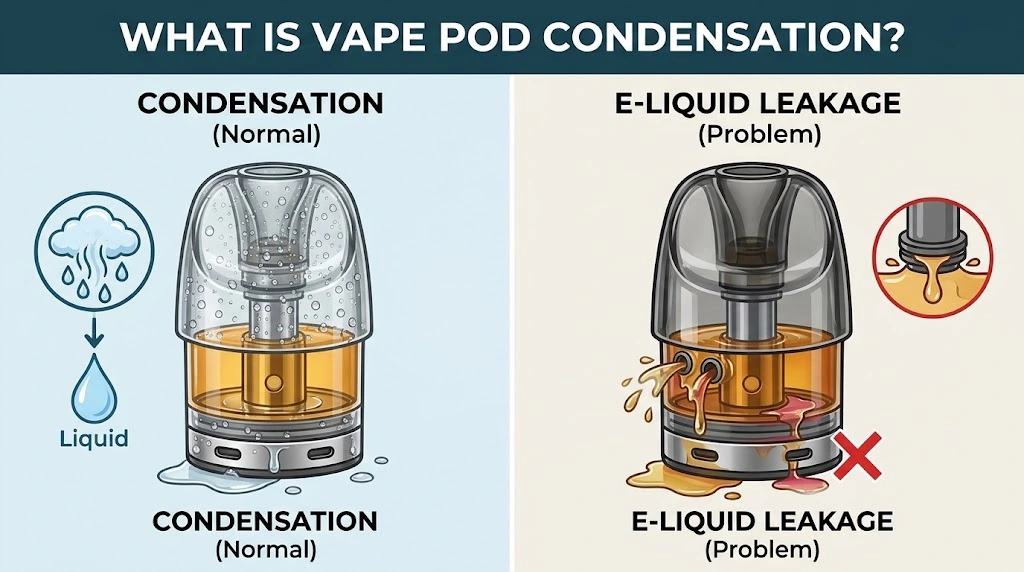
Condensation is when vapour cools and turns into liquid droplets. Condensation is a physical process. Condensation does not automatically mean your vape pod is defective.
When a vape pod operates the heating element creates aerosol from the e-liquid. Some of that aerosol moves through the airflow path toward the mouthpiece. While moving it touches internal surfaces.
As the aerosol cools moisture can gather inside the airflow path. Over time these tiny droplets build up. Create the wet residue that you sometimes see when you take out a pod.
Think of a cold glass of water on a humid afternoon. The outside of the glass becomes wet even though the glass itself is not leaking. The same cooling process explains the moisture inside a vape pod’s airflow system.
You can read more about the principle of condensation to see why temperature changes create moisture.
Why UAE Weather Makes Condensation More Noticeable
The UAE presents an environmental challenge for small electronic devices. Air‑conditioned indoor spaces and hot outdoor conditions can create temperature changes in a short time.
Imagine leaving a shopping mall in Abu Dhabi and walking into warm humid outdoor air.. Imagine carrying your device from an air‑conditioned home, in Sharjah into afternoon heat.
These temperature differences can encourage moisture to form on surfaces. Humidity can also influence how fast moisture appears and how long it stays around openings.
Dubai summer conditions create another situation. A device carried in a pocket may experience changing temperatures all day especially when moving between cooling and outdoor heat.
Remember: Condensation does not necessarily mean your pod is damaged. Small amounts of moisture can be a normal maintenance issue.
2. What Is True E-Liquid Leakage?
Unlike condensation, genuine leakage happens when e-liquid escapes from the pod’s intended internal reservoir or liquid pathway.
A properly functioning pod is designed to keep its liquid contained while allowing the heating element and airflow system to work. When a seal fails, the housing becomes damaged, or liquid enters the wrong area, leakage may occur.
Here are the most common reasons.
Flooded Coils
A flooded coil occurs when more e-liquid enters the heating chamber than the device can properly vaporise. Excess liquid may collect in the airflow pathway and eventually reach the mouthpiece or base.
This can happen because of overfilling, manufacturing issues, unsuitable storage, or an imbalance in the pod’s liquid delivery system.
You may notice gurgling sounds, weak aerosol production, or repeated wetness around the airflow opening.
Worn or Damaged Silicone Seals
Silicone seals help prevent e-liquid from escaping through openings and connections. With repeated handling, ageing, or physical damage, these seals may lose their ability to provide a proper barrier.
If moisture repeatedly appears around the same seam or connection point, inspect the pod carefully. A damaged seal may require pod replacement rather than repeated cleaning.
Cracked Pod Housing
Even a small crack can allow liquid to escape. Accidental drops, pressure from tightly packed bags, or rough handling may damage the pod’s plastic housing.
Look closely at the corners, bottom edges, and connection points. If you notice a visible crack, stop using the pod and replace it.
Hard Pulling and Over-Puffing
Taking very forceful or repeated draws can sometimes contribute to flooding, particularly when a pod’s airflow and liquid delivery system cannot keep up.
A moderate, natural draw is generally preferable to repeatedly pulling hard. If gurgling or liquid accumulation continues, allow the device to rest and inspect the pod.
Extreme Heat and E-Liquid Viscosity
E-liquids contain ingredients such as vegetable glycerine (VG) and propylene glycol (PG). Their proportions influence how thick or thin the liquid behaves.
Higher temperatures can reduce liquid viscosity, meaning the liquid becomes thinner and flows more easily. In hot UAE conditions, this may increase the possibility of leakage through an already weak seal or poorly fitted component.
Heat alone does not prove that a pod will leak. However, leaving it in direct sunlight or inside a hot vehicle can increase the risk of device and liquid damage.
3. How to Test Your Pod in 60 Seconds
Not sure which problem you are dealing with? Follow these three simple inspection steps before deciding whether the pod needs replacing.
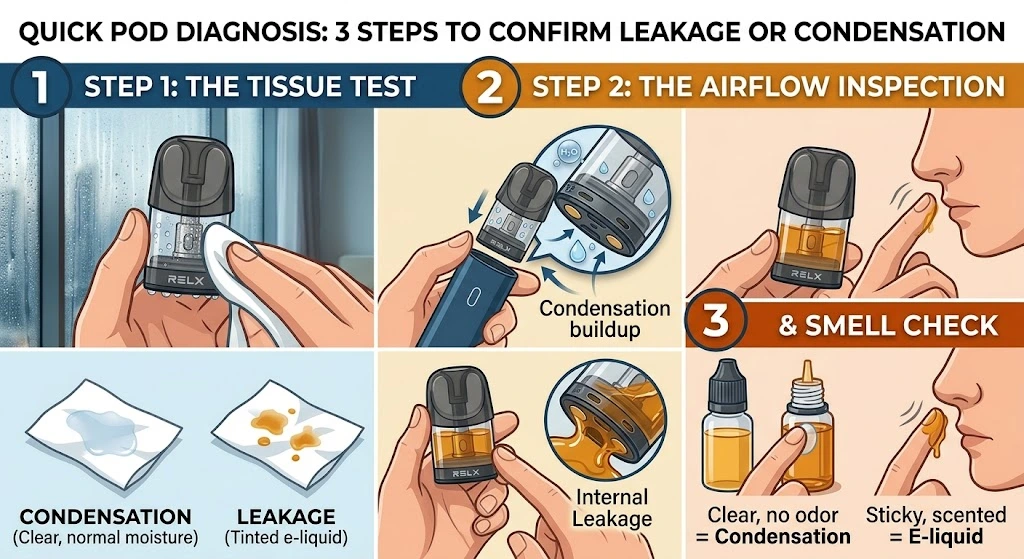
Step 1: The Tissue Test
Take a clean, white tissue and gently dab the wet area around the mouthpiece and pod exterior.
Look at what transfers onto the tissue.
- Clear, watery moisture: This may be condensation.
- Noticeably oily or slippery residue: This may indicate e-liquid.
- Coloured or strongly flavoured residue: This can also suggest e-liquid, depending on the formulation.
Remember that clear e-liquid exists too. Colour alone cannot confirm condensation, so consider the other signs before making a decision.
Do not taste the residue to identify it. E-liquid may contain nicotine and should not be deliberately ingested.
Step 2: The Airflow Inspection
Remove the pod according to the manufacturer’s instructions and inspect its exterior and device connection area.
Check the following:
- Is moisture limited to the mouthpiece or airflow chimney?
- Is liquid collecting around the bottom connection?
- Are the pod’s seams or silicone seals visibly damaged?
- Is the device contact area wet?
Small droplets inside the airflow channel may indicate condensation. Repeated liquid around the base or connection points deserves closer attention.
If liquid has reached the electrical contacts, stop using the device until it has been safely cleaned and inspected according to its manufacturer’s guidance.
Step 3: The Viscosity and Smell Check
Observe the residue without touching it unnecessarily.
Condensation usually behaves like ordinary water, while e-liquid may feel slightly slippery and carry a recognisable flavour-related smell. However, these characteristics vary between products.
Do not put the residue on your tongue or deliberately inhale it to identify its source. If you cannot confidently distinguish the substances, treat the liquid as potentially nicotine-containing e-liquid.
The 60-second verdict: Small amounts of clear moisture confined to the airflow pathway are more consistent with condensation. Recurring liquid around the seals, housing, or base is a stronger reason to replace the pod.
4. How to Clean Condensation Properly
If you identify a small amount of condensation, careful cleaning may be enough to resolve the problem.
Follow these practical steps:
- Remove the pod from the device.
- Use a clean, dry tissue to wipe the outside of the mouthpiece.
- Gently remove visible moisture from accessible airflow openings.
- Use a dry cotton swab around accessible connection areas.
- Check that the device contacts are clean and completely dry before reassembly.
Avoid inserting sharp objects, metal pins, or anything that could damage internal components. Never rinse the pod or electronic device under running water.
If moisture repeatedly returns, inspect the pod for flooding or damage rather than cleaning it indefinitely.
5. How to Prevent Genuine E-Liquid Leakage
Prevention starts with handling and storage. A few everyday habits can help reduce unnecessary leakage.
Store Pods Correctly
Keep pods in a clean, dry place away from direct sunlight and excessive heat. Follow the manufacturer’s recommended storage position and conditions.
Avoid leaving loose pods inside tightly packed bags where they may experience pressure or accidental damage.
Avoid Extreme UAE Temperatures
Never leave a vape device or pod on a car dashboard in Dubai’s summer heat. A parked vehicle can become considerably hotter than the outside temperature.
The same applies to windowsills, outdoor tables, and other places exposed to direct sunlight.
When travelling between air-conditioned spaces and humid outdoor conditions in Ajman or Abu Dhabi, allow the device to adjust naturally rather than exposing it to sudden heating or cooling.
Use a Moderate Draw Technique
Repeatedly pulling too hard may contribute to liquid entering the airflow system. Avoid excessively forceful draws and follow the recommended operating instructions for your particular device.
Replace Damaged or Worn Pods
A pod with a cracked housing, damaged seal, or persistent leakage should not be reused. Cleaning cannot repair a structural defect.
If you need a compatible replacement, compare available replacement RELX pods and check the device compatibility before purchasing.
Choose and Handle Products Carefully
Different pod designs may have different construction and sealing arrangements. You can browse the Disposable vape collection to review available product categories.
For users comparing RELX products, the RELX Pod Pro flavors provide a dedicated product range. One example is RELX Pod Pro Watermelon Ice.
For product information and store details, visit RPOD Store UAE.
Always check applicable UAE regulations, product authenticity, age restrictions, and manufacturer instructions before purchasing or handling vape products.
6. When Should You Stop Using a Leaking Pod?
Not every wet spot requires immediate concern, but certain warning signs should never be ignored.
Stop using the pod if:
- Liquid is repeatedly escaping from its housing.
- The pod has a visible crack or damaged seal.
- Liquid has entered the device’s electrical connection area.
- The device behaves unusually after liquid exposure.
- You notice persistent gurgling or significant liquid accumulation.
Do not attempt to repair a cracked pod with glue or household sealants. Replace damaged components instead.
If e-liquid contacts your skin, wash the affected area with soap and water. If liquid enters your eyes, rinse thoroughly with clean water and seek appropriate medical advice. If swallowed, seek urgent medical or poison-control guidance, particularly when nicotine may be present.
7. FAQs About Condensation vs E-Liquid Leakage
1. Why Is My Vape Pod Wet Around the Mouthpiece?
Vape Pod may have an amount of clear moisture around the mouthpiece.This usually happens when vapor cools inside the airflow chimney and condenses.If Vape Pod has a smell or slippery liquid that keeps coming out Vape Pod may be flooded or leaking. Check Vape Pod before using it
2. How Can I Tell If My Vape Pod Is Leaking or Condensation Is Forming?
Look at where the moisture’s how it looks and how it feels.Condensation shows up as clear drops inside the airflow path.Leakage appears when Vape Pod keeps collecting liquid around seals, seams or the base.These signs help,. They are not certain.
3. Can Dubais Hot Weather Cause Vape Pods to Leak?
High heat can thin e-liquid and make it move more through seals or damaged parts.Leaving Vape Pod in a car or, in direct sunlight can raise the risk of leakage and other heat damage.
4. Is It Normal to Find Liquid at the Bottom of a Vape Pod?
A little moisture can sometimes appear around the airflow or connection area.If Vape Pod keeps pooling liquid underneath do not ignore it.Check Vape Pod. Housing. Replace Vape Pod if leakage keeps happening.
5. Should I Replace My Vape Pod If It Keeps Leaking?
Yes. If Vape Pod leaks again after proper handling and cleaning replace Vape Pod.A damaged seal, cracked housing or constant flooding may not be fixed by cleaning.
Final Thoughts
Condensation and genuine e-liquid leakage can look similar, especially when you notice moisture around your pod after spending time outdoors in the UAE. The key is to examine where the moisture appears, how it behaves, and whether it returns after cleaning.
Small amounts of clear moisture inside the airflow pathway may simply be condensation. Repeated liquid around the base, seals, or pod housing deserves more attention.
With careful inspection, sensible storage, and timely replacement of damaged components, you can avoid unnecessary waste and protect your device from liquid-related damage.